Muybridge, 1878
The Instant
The wager the camera settled.
A racing bet became the birth certificate of motion pictures: twelve frames proving all four hooves leave the ground, then the locomotion grids every animator, physiologist, and painter has cribbed since. The eye believed; the shutter knew. Sport and science share these negatives.
1878–1887 · United States
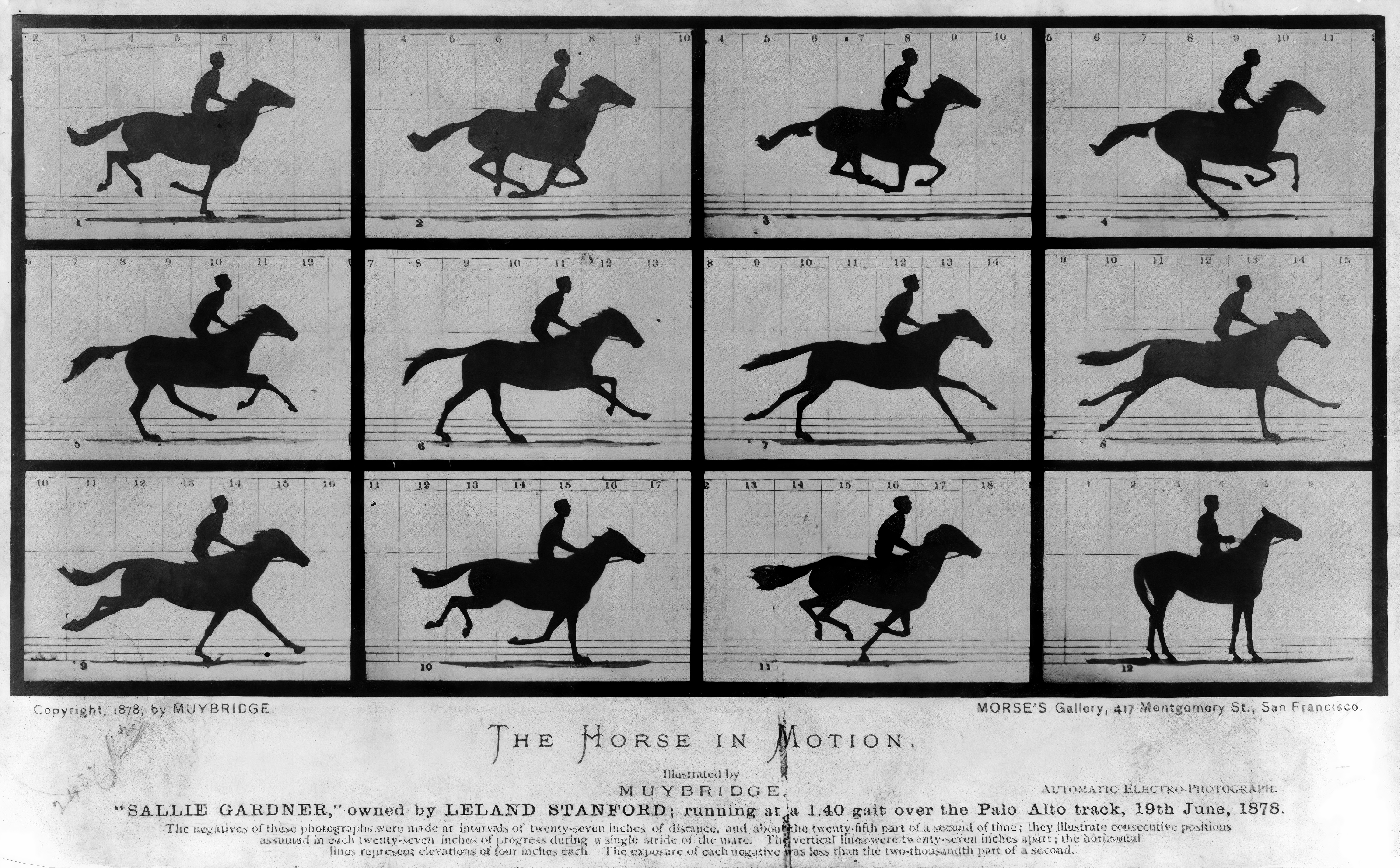
The Horse in Motion — 1878
Twelve frames proving all four hooves leave the ground — the photograph that ended a century’s argument.
Animal Locomotion — the Gallop Grid
The stride laid out as a grid — motion made legible, one frame at a time.
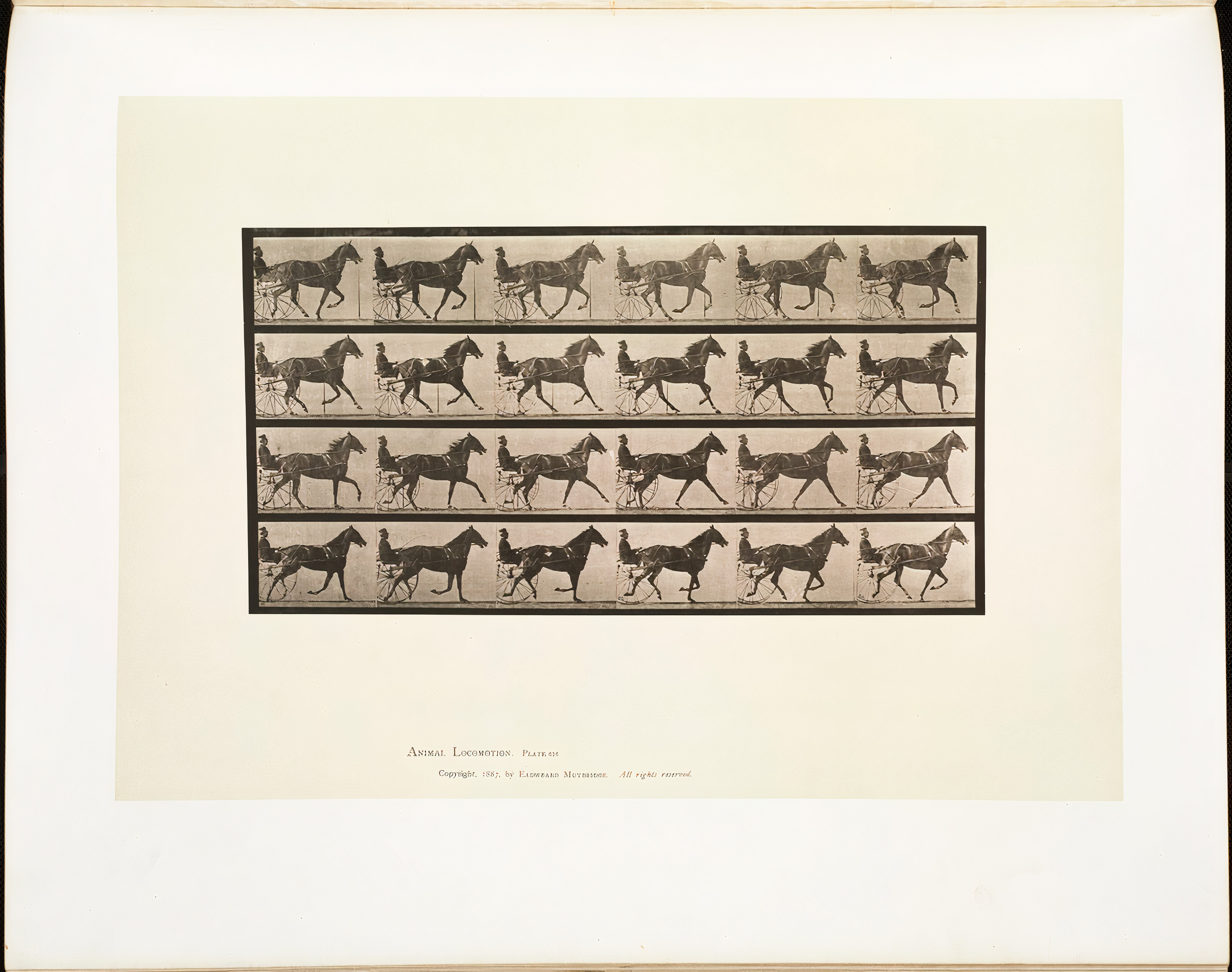
Animal Locomotion, Plate 614
Muybridge lays a galloping horse out in serial frames on Plate 614, the stride finally taken to pieces by the camera.
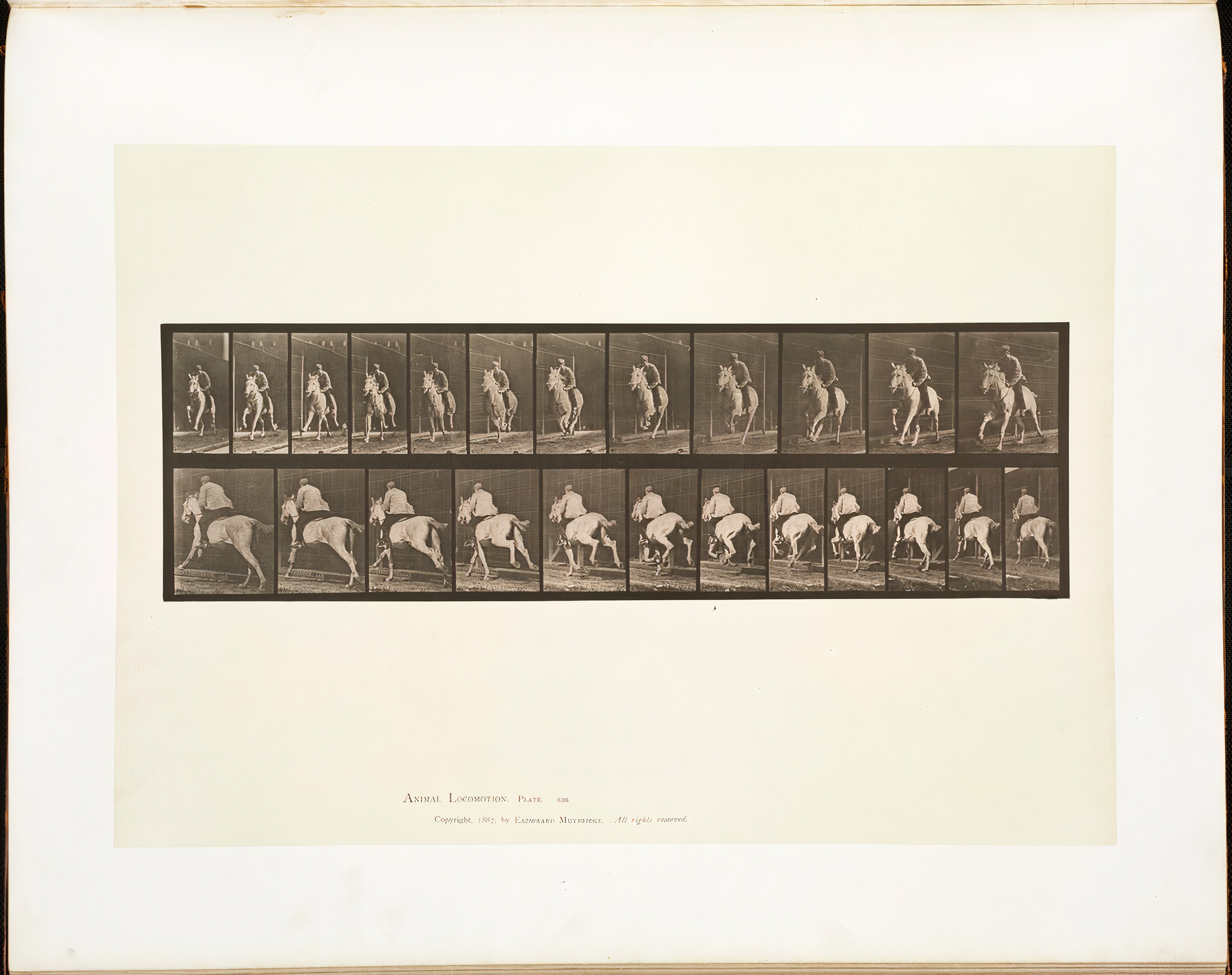
Animal Locomotion, Plate 630
Plate 630 runs the horse through its paces in a strip of exposures, motion pinned like a specimen.
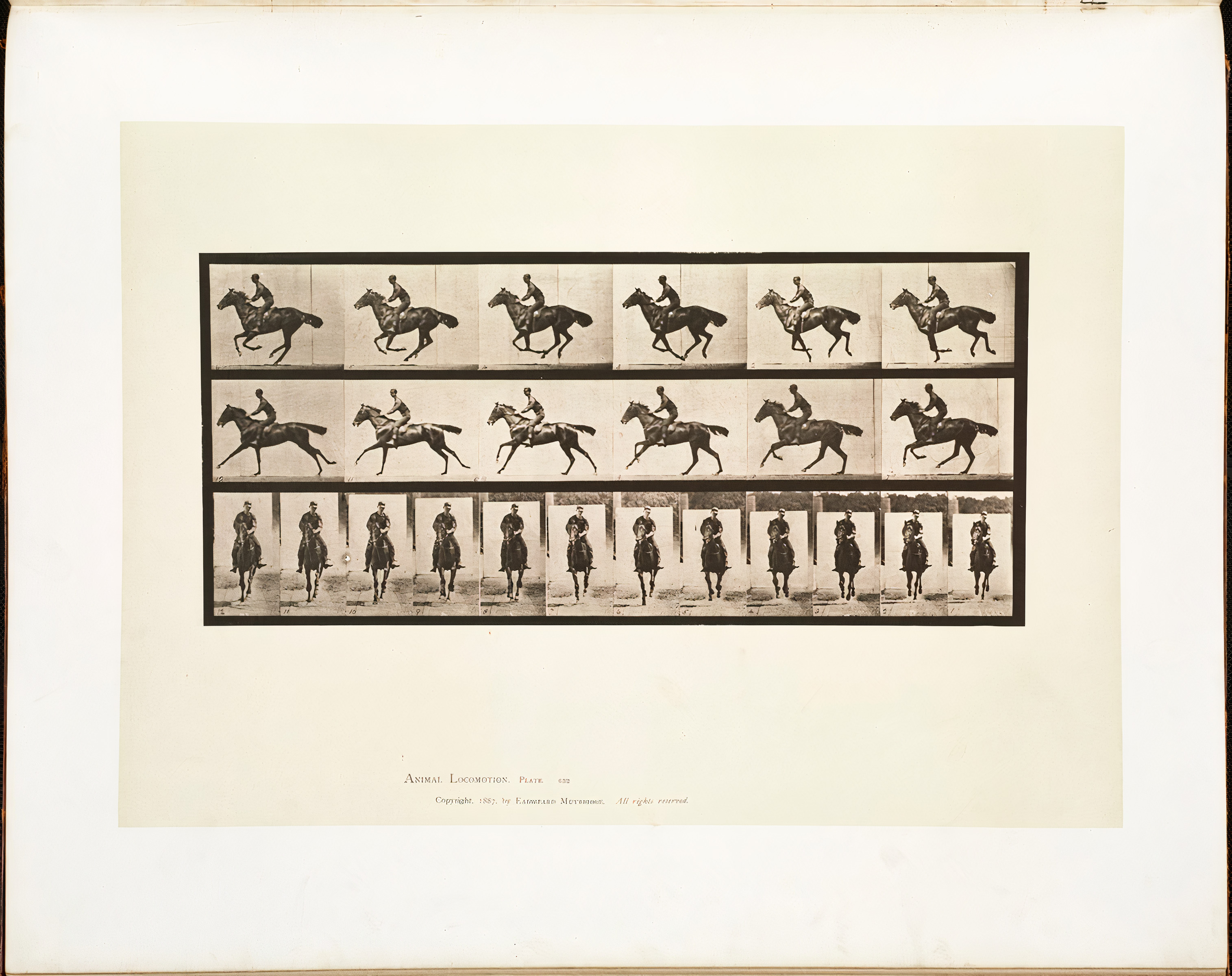
Animal Locomotion, Plate 632
Plate 632 sets a ridden horse through the sequence, rider and mount dissected in the same instant.
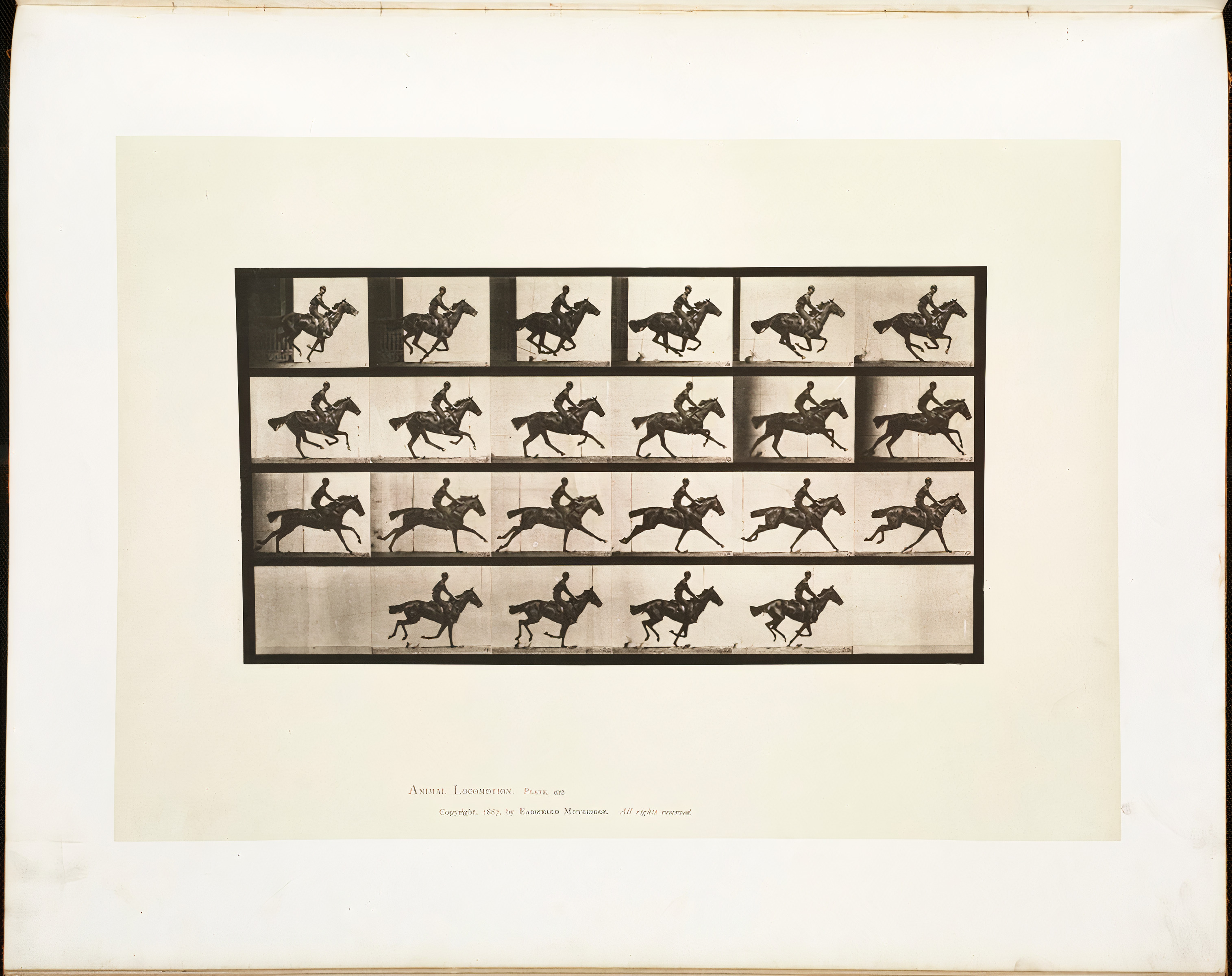
Animal Locomotion, Plate 625
Plate 625 sets the horse's gait in a grid, Muybridge proving what no eye at the rail could ever hold.
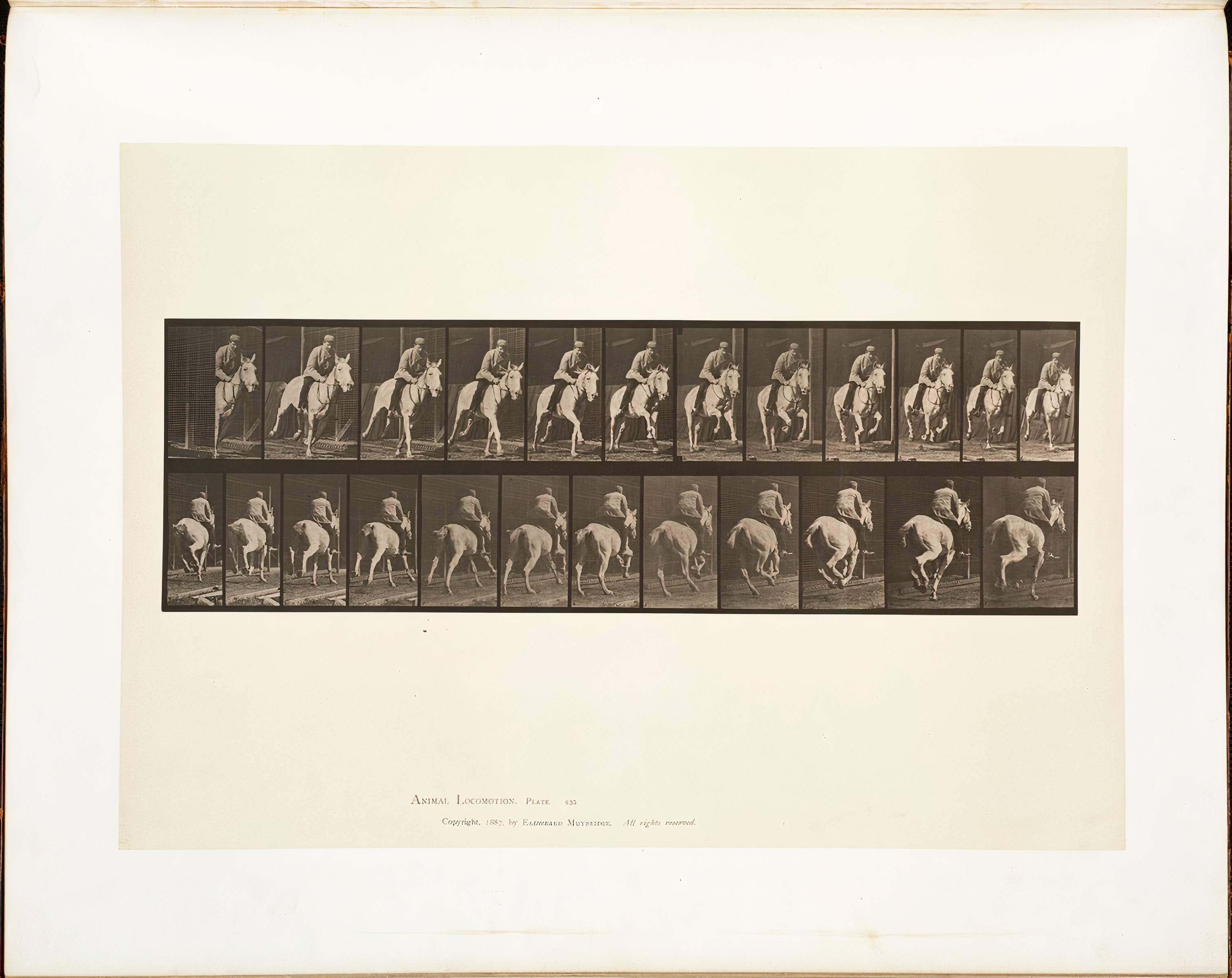
Animal Locomotion, Plate 635
Plate 635 closes the horse series, Muybridge's camera settling forever the argument over the flying gallop.
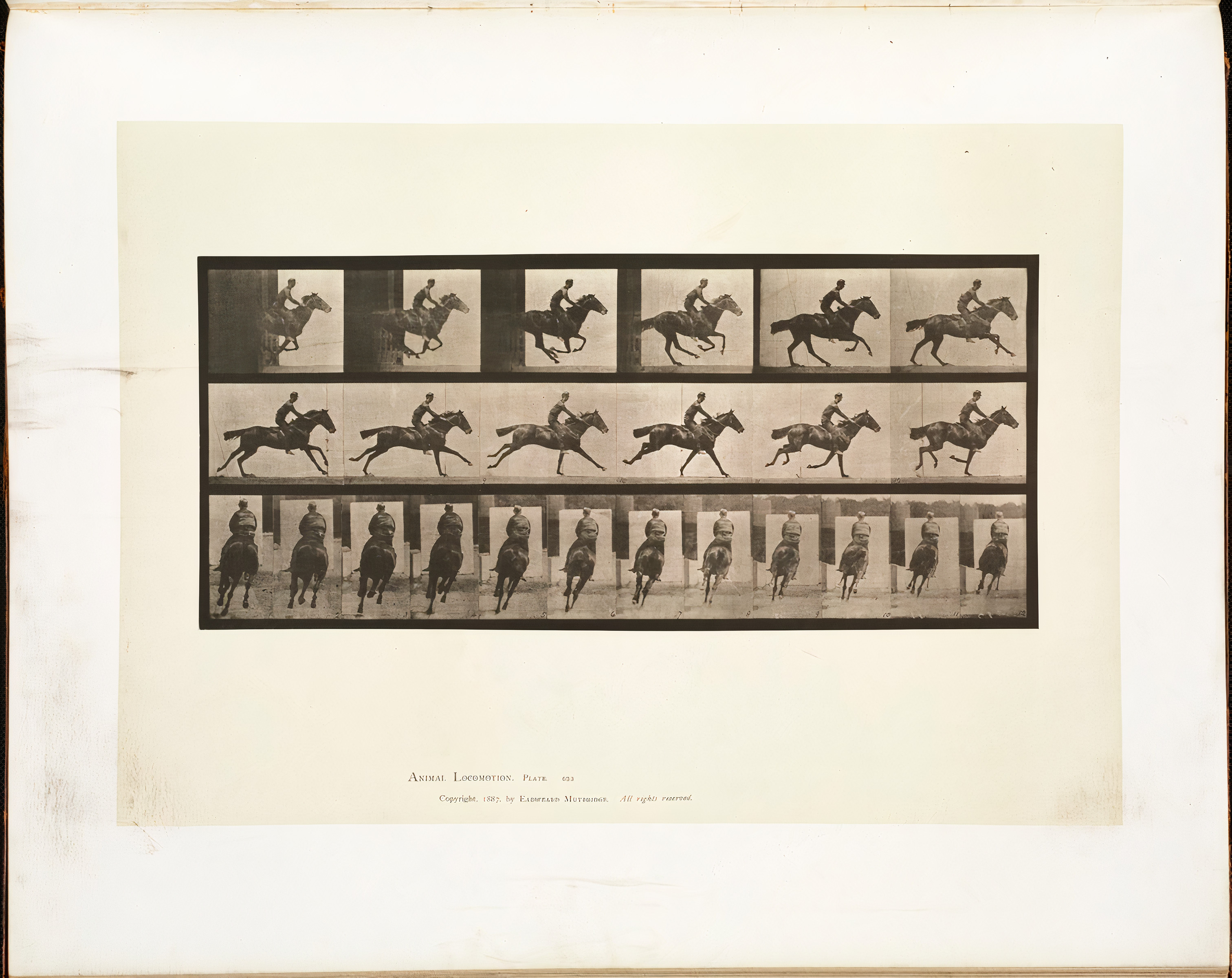
Animal Locomotion, Plate 633
Plate 633 catches the horse and rider frame by frame, the whole gallop laid bare in a row of stopped time.
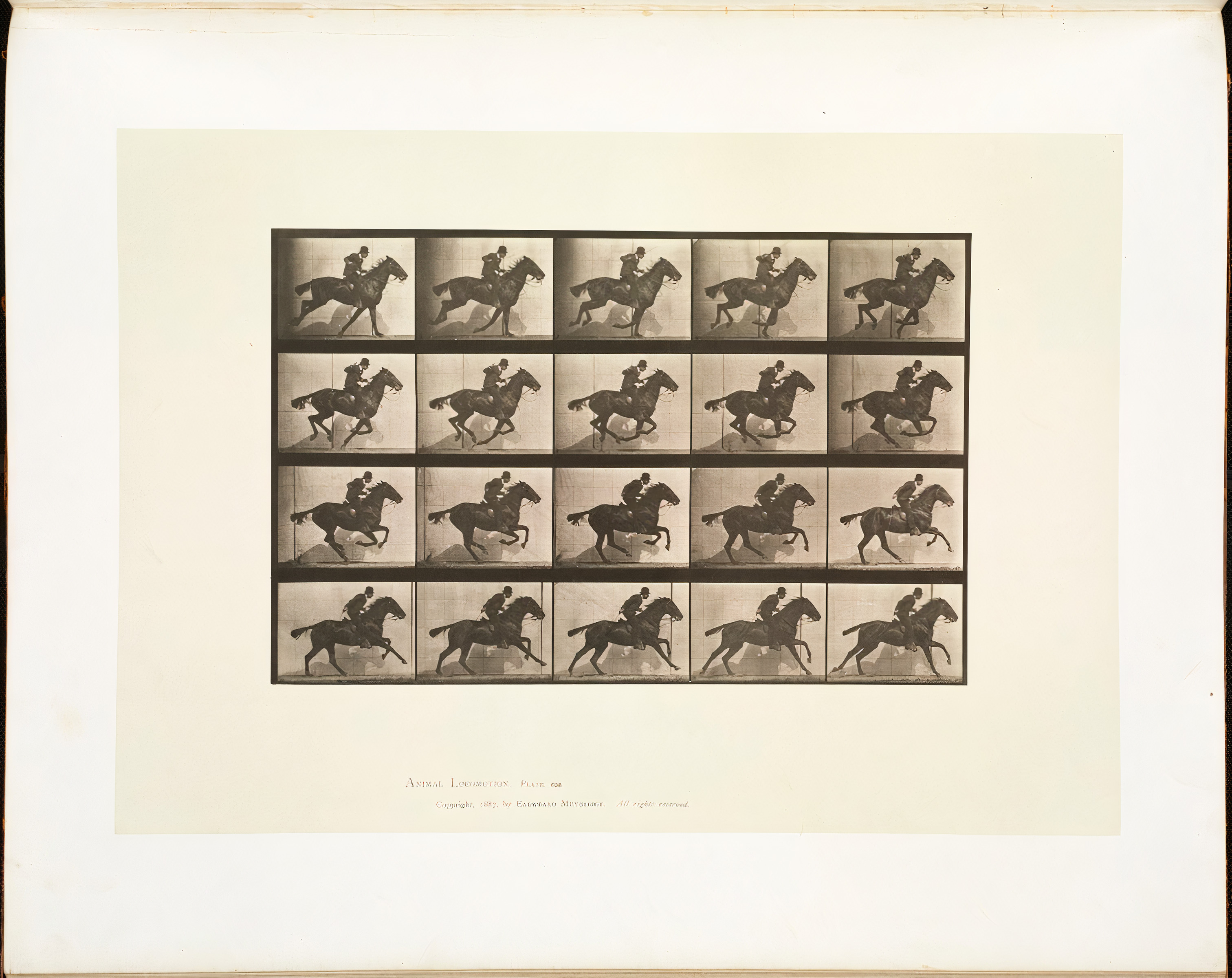
Animal Locomotion, Plate 628
Plate 628 walks the horse frame by frame, Muybridge cataloguing the machinery of the walk.
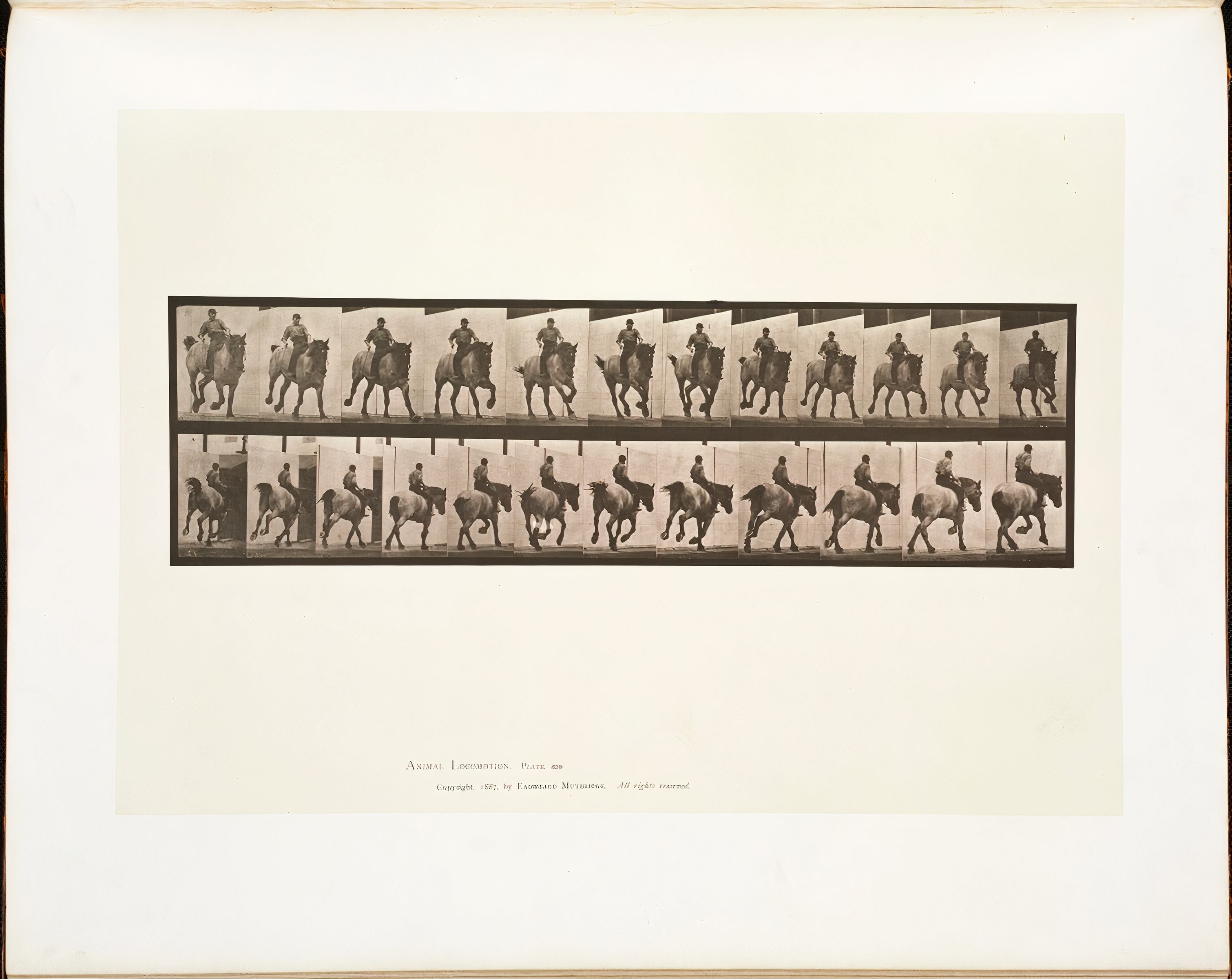
Animal Locomotion, Plate 629
Plate 629 holds the horse mid-stride across the sequence, the instant the turf never lets you see.
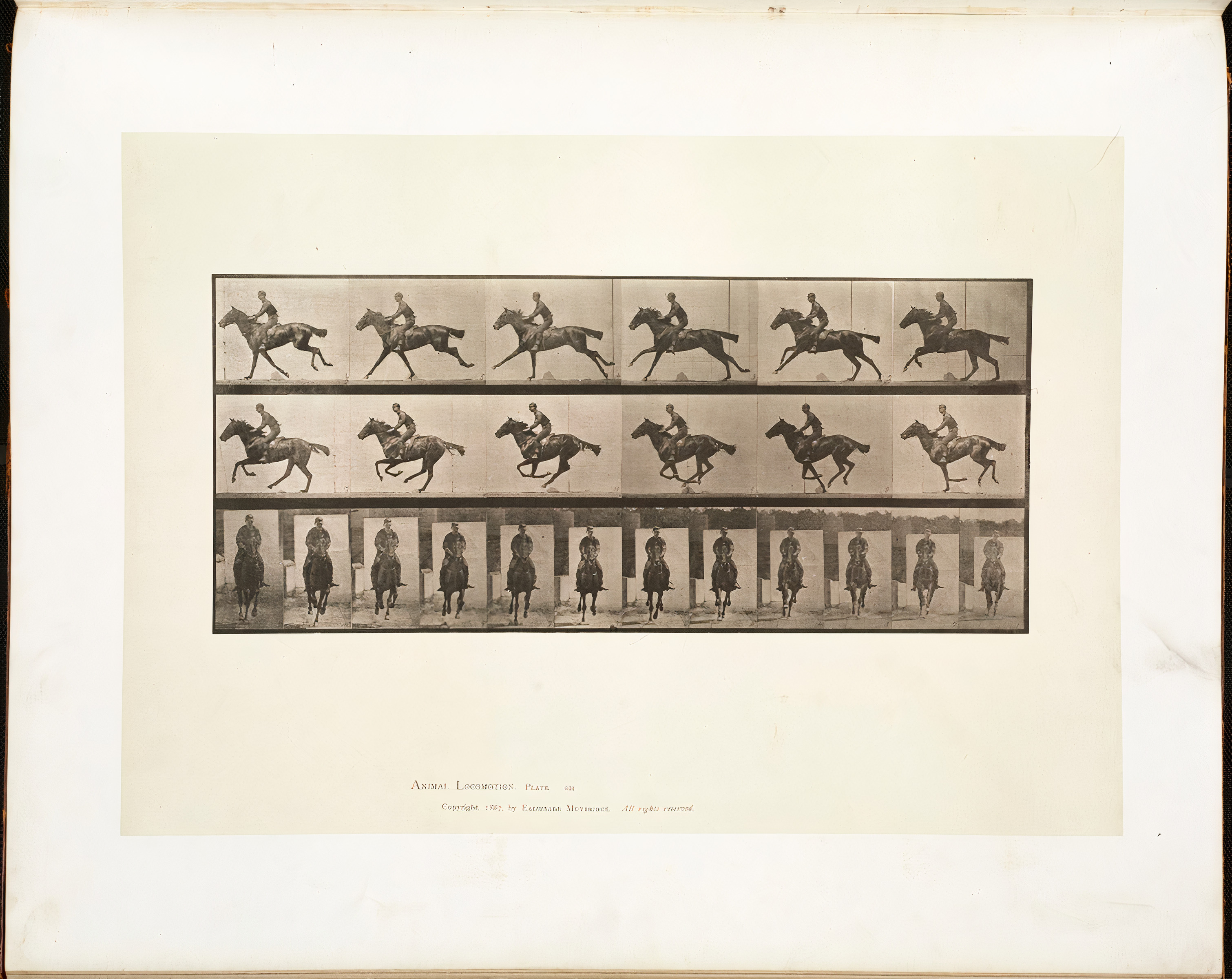
Animal Locomotion, Plate 631
Plate 631 breaks the canter into its parts, Muybridge's grid making a science of the stride.